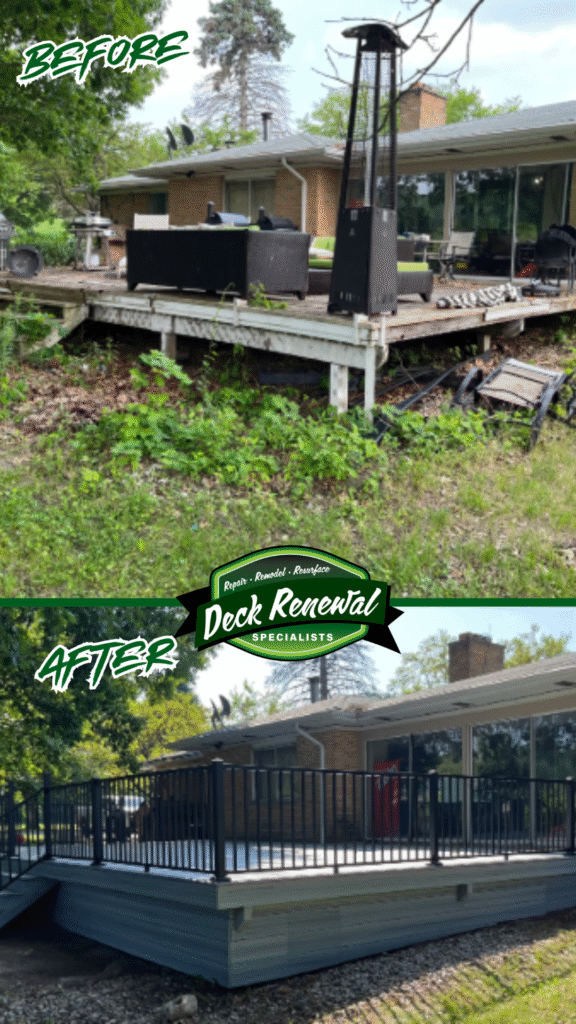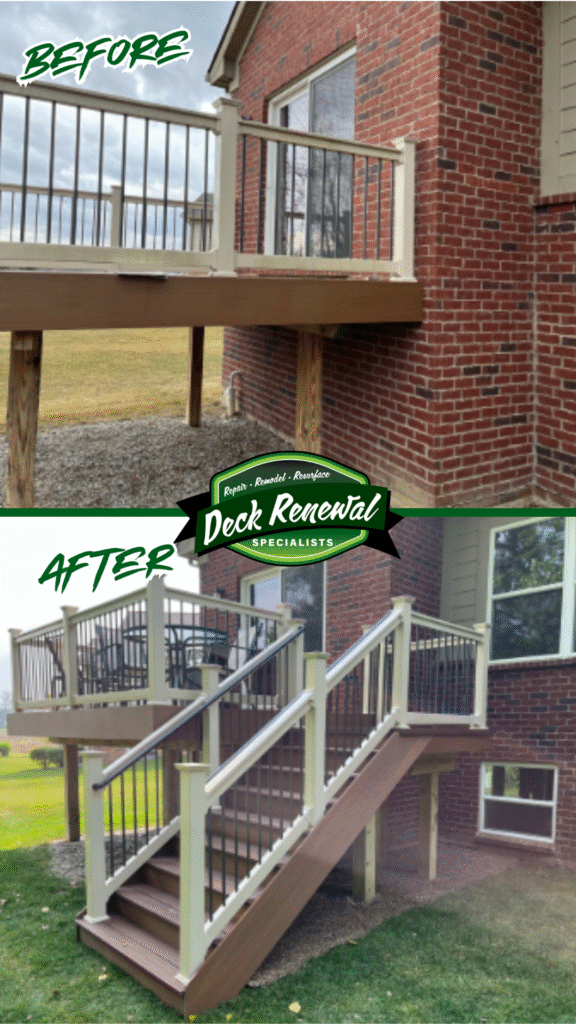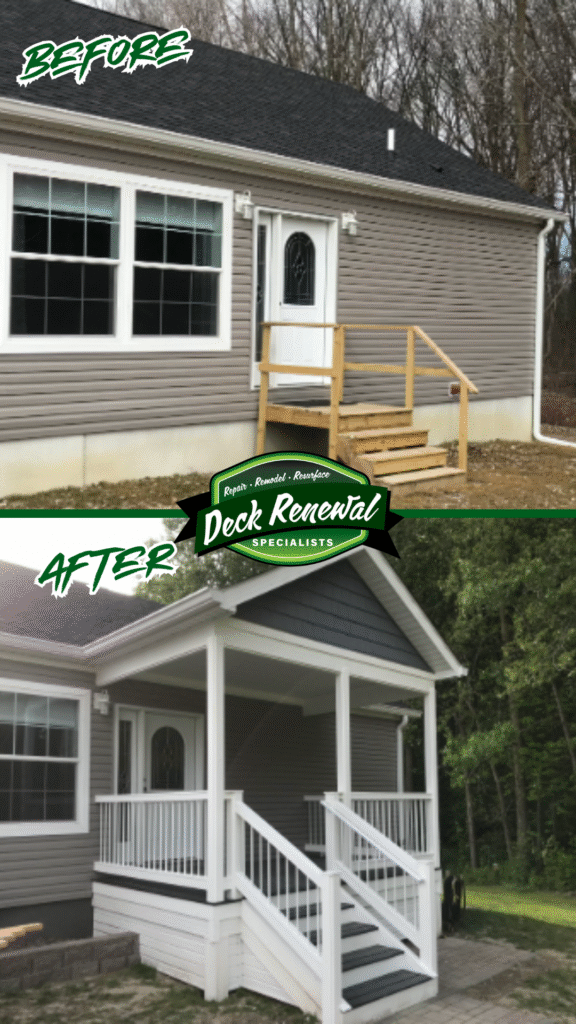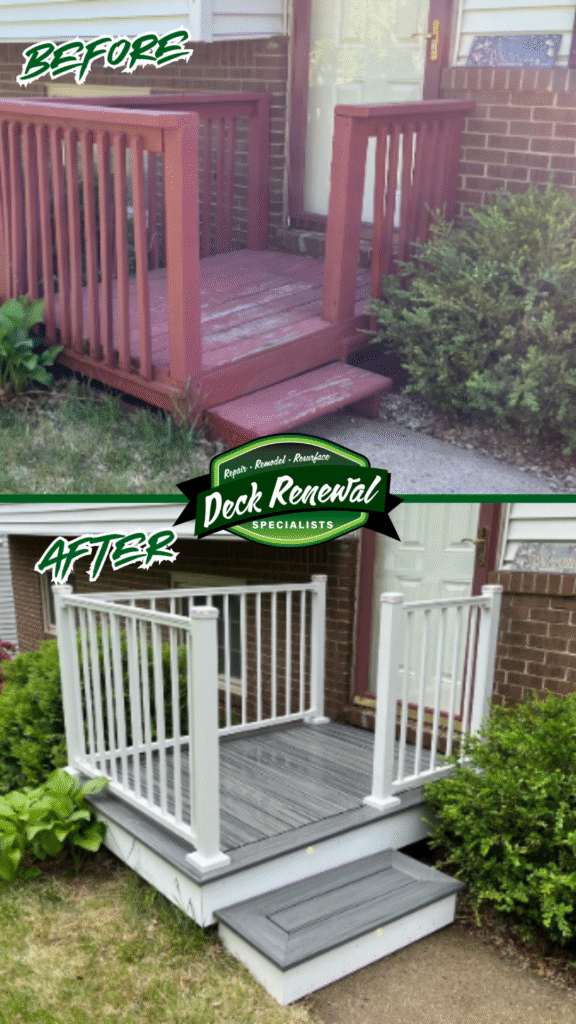

Why Replace Your Deck Boards Instead of Rebuilding?
In many cases, the substructure of your deck (like joists and footings) is still solid. Instead of a complete rebuild, our approach focuses on replacing only the damaged or outdated boards, saving you time and money, and/or refinishing your deck at a fraction of the price of rebuilding.
Replacing deck boards:
Restores safety to your outdoor space
Improves appearance without major construction
Eliminates splinters, warping, and structural hazards
Prevents further damage from mold, mildew, or termites
Common Signs You Need Deck Board Replacement
Knowing when to replace your deck boards can save you from more costly repairs down the line. Here are the top indicators that it’s time to take action:
Splintered or Cracked Boards: Over time, exposure to sun and moisture can cause boards to split or break, making your deck unsafe and unsightly.
Warping or Cupping: Warped boards often curve or lift from their fasteners due to repeated moisture cycles or poor sealing.
Spongy or Soft Areas: When boards feel soft or spongy underfoot, it’s a sign of wood rot, mold growth, or termite activity beneath the surface.
Visible Holes or Surface Damage: Small holes, chips, or indentations can come from termite damage, foot traffic, or dropped objects, and often get worse over time.
Uneven or Loose Boards: If your deck feels uneven, bouncy, or has nails and screws popping up, the boards may be pulling away from the substructure.
Discoloration or Musty Odor: Mildew, mold, and trapped moisture can lead to staining and odors that are hard to remove and indicate deeper issues.
Rusty Fasteners or Loose Connections: When screws or nails begin to rust or fail, it may compromise the entire decking surface.
Persistent Creaking or Squeaking: Sounds when you walk on the deck often signal shifting, loose fasteners, or internal structural damage.
If any of these signs are present, it’s best to schedule a free deck inspection to avoid a full rebuild later.
Wood vs. Composite Deck Boards
We offer a range of board replacement options to match your current setup or upgrade your space:
Wood Deck Board Replacement
Ideal for customers who love a natural look. We match the style, grain, and finish of your existing deck for a seamless blend.
Composite Deck Board Replacement
Looking for a low-maintenance and long-lasting solution? Composite boards like Trex offer durability, weather resistance, and fade-proof finishes.
We’ll walk you through pros and cons so you can choose what’s best for your home, climate, and budget.
FAQs About Deck Board Replacement
How do I know if my deck boards need to be replaced or just repaired?
If your boards are splintered, warped, soft, or show signs of rot, mildew, or termite damage, they likely need replacement. Minor surface wear can sometimes be fixed with sanding and sealing, but deeper damage usually requires new boards.
Can I replace just a few damaged deck boards, or do I need to replace the whole deck?
In many cases, yes—you can replace only the damaged boards, especially if your substructure (joists, posts, footings) is still in good shape. We’ll inspect your deck to determine what can be saved.
What’s the difference between wood and composite deck boards?
Wood boards are natural, affordable, and offer a classic look, but require maintenance. Composite boards (like Trex) are low-maintenance, weather-resistant, and ideal for long-term durability. We’ll help you choose the best option for your budget and lifestyle.
How much does deck board replacement cost?
The price depends on the size of your deck, material chosen, and extent of damage. We offer free inspections and estimates and have financing options available for qualifying customers.
Can you match my existing deck boards?
Absolutely. Whether you’re using wood or composite, we do our best to match the color, grain, and profile of your current decking for a seamless finish.
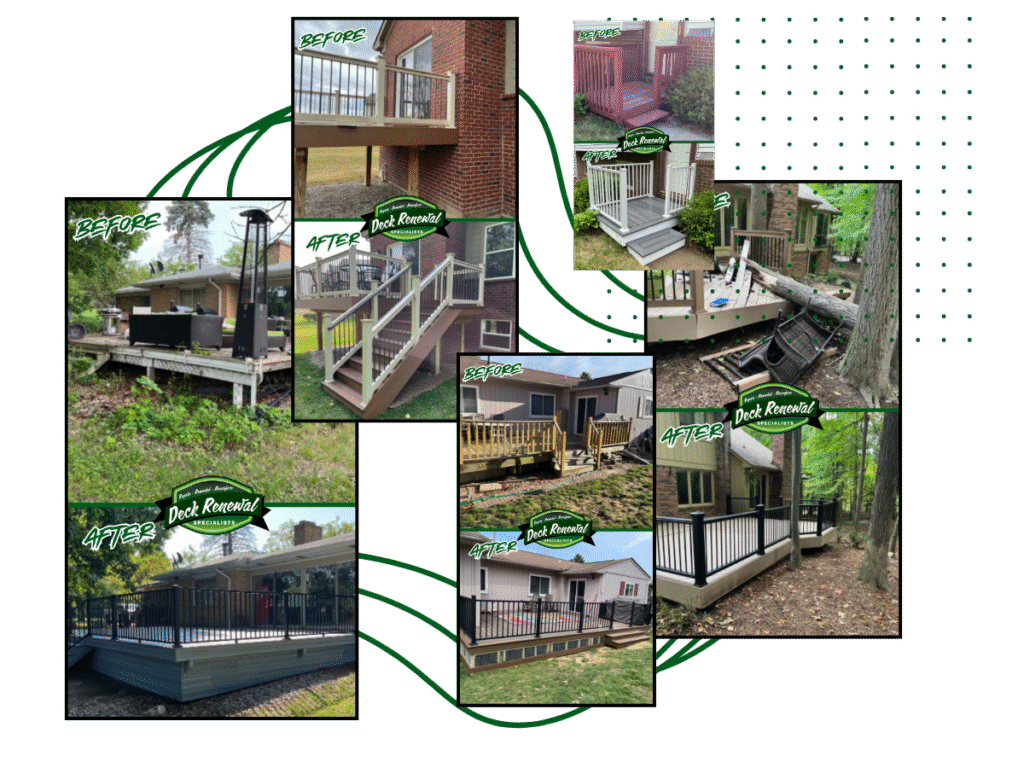
Recent Deck Repair and Restoration Projects